Mold Removal in El Jobean, FL
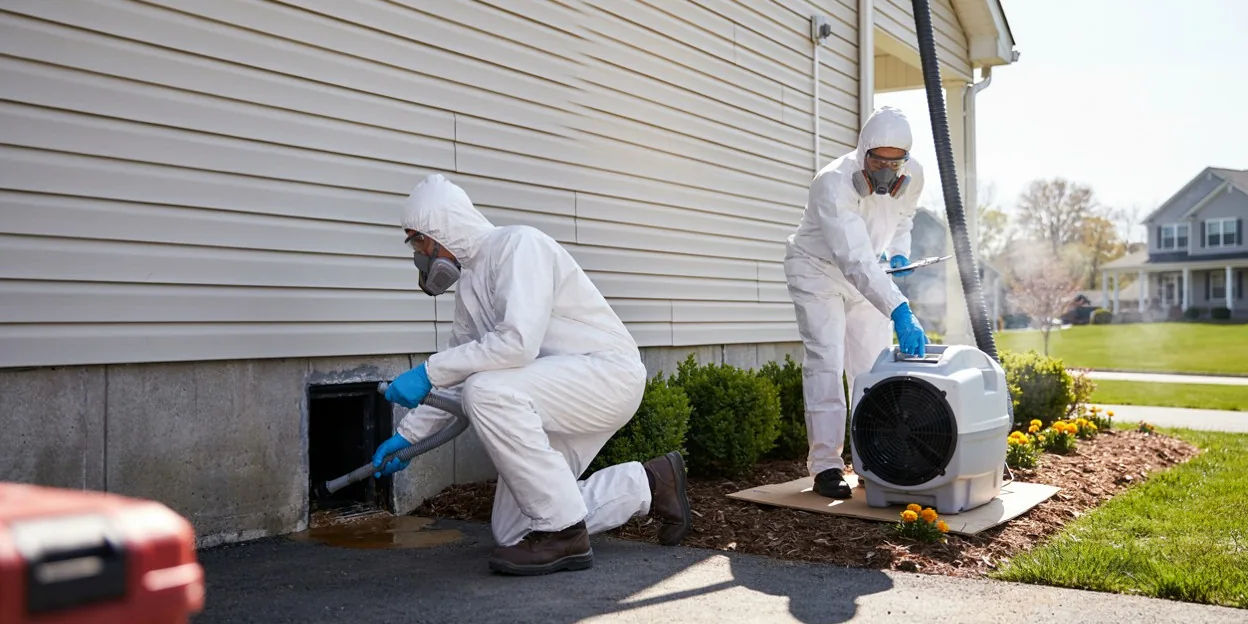
El Jobean is the small community where State Road 776 crosses the Myakka River on its way from Port Charlotte to Englewood, a 1920s townsite named by rearranging the letters of its founder's name, Joel Bean. It is a handful of streets along the river and Charlotte Harbor, with 1950s and 1960s fishing cottages, block homes from the 1970s onward, and manufactured homes and RV lots near the bridge.
The river is on three sides. El Jobean sits at the mouth of the Myakka where it opens into the harbor, and surge comes up both. Hurricane Ian's surge on September 28, 2022 and Milton's in October 2024 both put water in the low streets, and the Myakka's record crest after Ian kept the ground wet for weeks afterward. Houses here are a few feet above the water on a normal day.
El Jobean homeowners who call us reach an independent mold provider who works west Charlotte County. The provider meters the walls and the floor before writing anything.
What the river leaves behind in El Jobean
Surge water under doors and through weep holes leads to mold removal along the base of block walls and under cabinets. Cottages and manufactured homes with wet floors and a smell that lingers are mold odor removal calls. When walls and cabinets come out, mold damage repair rebuilds them once the slab reads dry.
Where the Myakka meets the harbor
Across the bridge and down the shoreline, Charlotte Harbor Preserve State Park protects more than 45,000 acres and over 100 miles of shoreline around the harbor El Jobean sits on, the third-largest state park in Florida. That shoreline is mangrove and salt marsh for a reason: the harbor rises into it in every storm, and El Jobean's streets are the next thing uphill. Permits for the rebuild go through Charlotte County, and the provider pulls them.
Call (941) 420-6510 now and tell us how high the water came and when. We put you through to a mold provider who works El Jobean.
Services Available in El Jobean
Mold Removal
Containment, negative air, and removal of wet drywall, trim, and insulation from a North Port block house, then cleaning and drying of what stays.
Black Mold Removal
Dark growth handled under full containment and protective gear. Color does not name the species, and the steps do not change.
Whole-Home Mold Remediation
Room-by-room containment and removal after storm water, weeks without power, or a house closed up through a wet summer.
HVAC Mold Cleaning
Air handler, coil, drain pan, and duct cleaning when the musty smell arrives every time the air conditioning cycles on.
Bathroom Mold Removal
Growth on ceilings, in grout, behind vanities, and inside wet drywall from steam and slow leaks, the most common first call.
Attic Mold Remediation
Roof-deck and truss mold from lifted shingles, blocked soffits, and flex duct sweating in a hot North Port attic.
Mold Odor Removal
Tracing a musty smell to the wet material behind it, removing that material, and clearing the air instead of masking it.
Mold Damage Repair
Drywall, baseboard, insulation, and cabinet bottoms rebuilt after removal, with the water source fixed before anything closes up.