Mold Removal in Englewood, FL
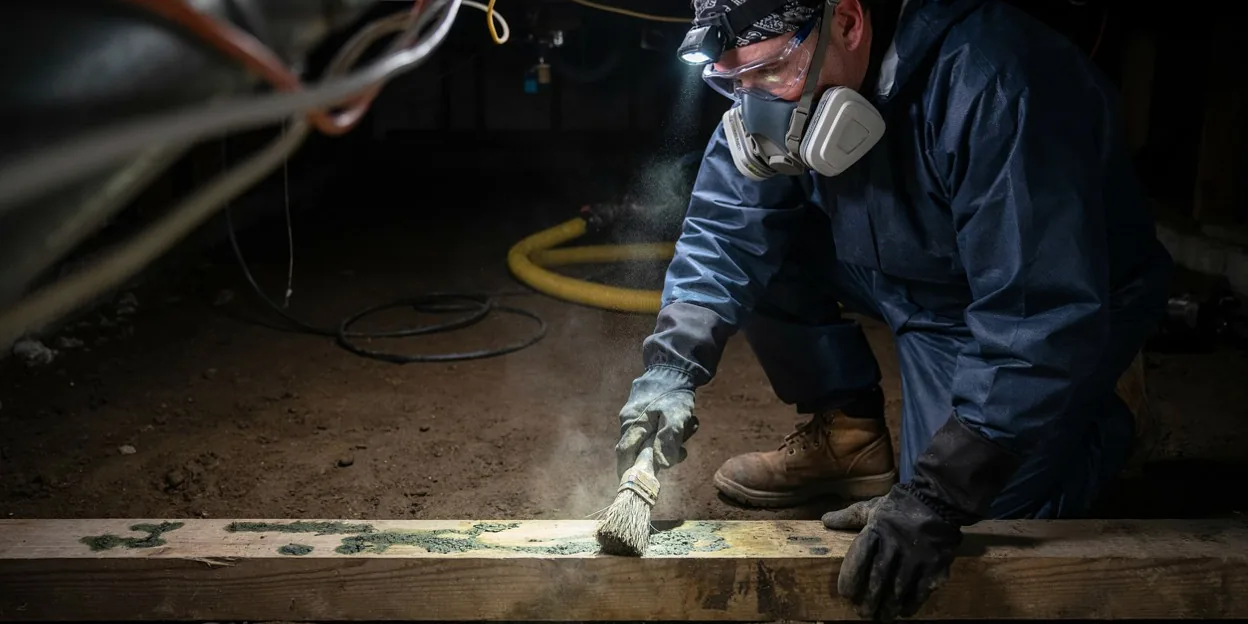
Englewood straddles the Sarasota and Charlotte county line along Lemon Bay, a stretch of fishing cottages from the 1950s, block ranches from the 1970s and 1980s, and newer homes on the canals off Dearborn Street and out toward Manasota Key. Many homes here are second homes or retirement homes, and a good number sit empty from spring to fall.
The bay and the Gulf set the moisture pattern. Salt air corrodes window frames and door tracks, which then leak, and ground water sits close to the surface on the older lots. Hurricane Ian crossed the coast just south of here in September 2022, and Milton's surge in October 2024 ran six to nine feet above ground from Venice to Boca Grande, with the highest water near the south end of Manasota Key.
Englewood homeowners who call us reach an independent mold provider who works both sides of the county line. That provider meters the walls and sets the scope from the readings.
The jobs Englewood homes tend to need
Surge or rain water under a door leads to mold removal along the base of a block wall. A seasonal house that sat closed and smells on return is mold odor removal. When drywall and cabinets come out after a storm, mold damage repair puts them back once the block reads dry.
Two counties, one water district, one hospital
Water and sewer here come from the Englewood Water District, an independent district covering about 44 square miles across the two counties, which matters when a crew is trying to tell a supply-line leak from ground water under a slab. Permits for the rebuild go to Sarasota County or Charlotte County depending on which side of the line the house sits; Charlotte keeps a permit office on San Casa Drive for this reason. HCA Florida Englewood Hospital on Medical Boulevard runs the emergency room for anyone in the house whose breathing is affected.
Call (941) 420-6510 now and say which county your Englewood address falls in and what got wet. We put you through to a mold provider who works the area.
Services Available in Englewood
Mold Removal
Containment, negative air, and removal of wet drywall, trim, and insulation from a North Port block house, then cleaning and drying of what stays.
Black Mold Removal
Dark growth handled under full containment and protective gear. Color does not name the species, and the steps do not change.
Whole-Home Mold Remediation
Room-by-room containment and removal after storm water, weeks without power, or a house closed up through a wet summer.
HVAC Mold Cleaning
Air handler, coil, drain pan, and duct cleaning when the musty smell arrives every time the air conditioning cycles on.
Bathroom Mold Removal
Growth on ceilings, in grout, behind vanities, and inside wet drywall from steam and slow leaks, the most common first call.
Attic Mold Remediation
Roof-deck and truss mold from lifted shingles, blocked soffits, and flex duct sweating in a hot North Port attic.
Mold Odor Removal
Tracing a musty smell to the wet material behind it, removing that material, and clearing the air instead of masking it.
Mold Damage Repair
Drywall, baseboard, insulation, and cabinet bottoms rebuilt after removal, with the water source fixed before anything closes up.