Mold Removal in Sabal Trace, FL
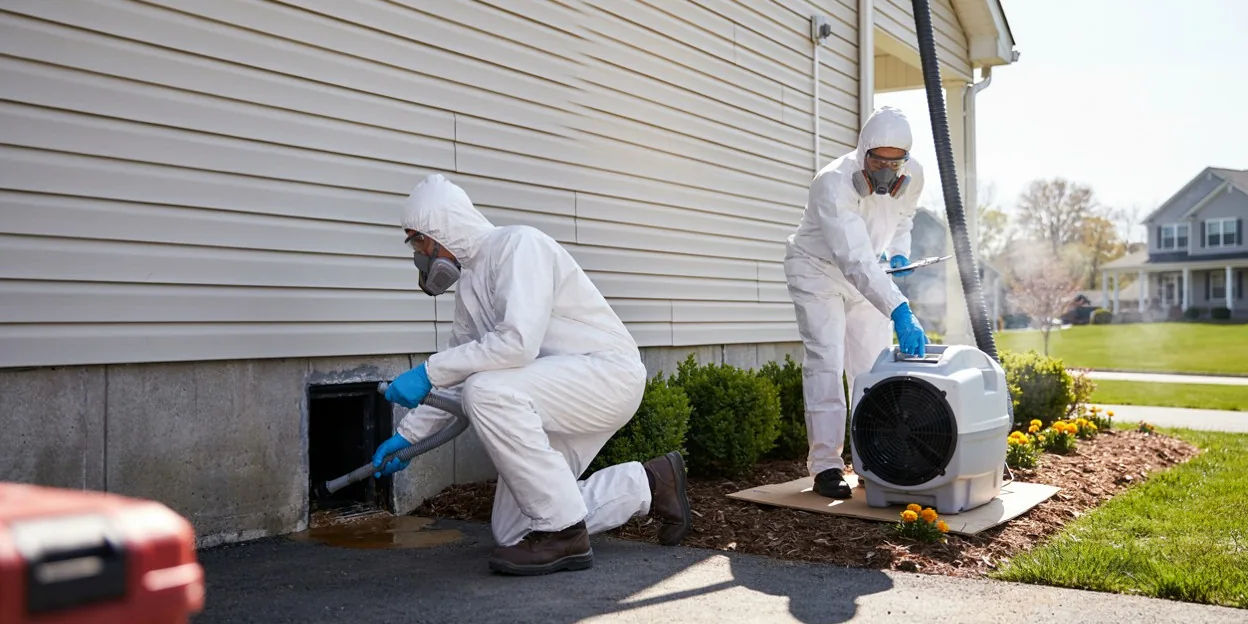
Sabal Trace is the gated community off Sumter Boulevard north of U.S. 41, built in the 1990s and 2000s around a golf course, with single-family homes, villas, and the Villas of Sabal Trace along Lakewood Boulevard. The houses are block on slab with tile or shingle roofs and screened lanais, and many back onto fairways or ponds.
The 1990s houses here are at the age where the first things fail: original roof underlayment, original window seals, and twenty-year-old condensate lines in a closet air handler. Each of those puts water somewhere it should not be. Ian's wind in September 2022 lifted shingles on the older roofs, and the week or more without power after it let wet insulation sit in the attic.
Sabal Trace homeowners who call us reach an independent mold provider who works central North Port. The provider reads the house with a meter before writing a scope.
What a 1990s Sabal Trace house calls about
Roof damage and tarps lead to attic mold remediation. A closet handler with a backed-up drain line and a smell at the vents is HVAC mold cleaning. Once drywall and a vanity come out, mold damage repair puts them back with a texture that matches the rest of the house.
Villas, shared walls, and who owns the roof
In the villa sections, the association typically owns the roof and the exterior walls and the owner owns everything inside the drywall, so a leak that starts in the roof and ends in a bedroom ceiling involves both. Notify the association in writing before the crew cuts, photograph everything, and have the crew's moisture readings show where the water came from. Permits for the rebuild go through North Port's Development Services office.
Call (941) 420-6510 now and tell us whether the home is a single-family house or a villa and what got wet. A local mold provider serving Sabal Trace takes it from there.
Services Available in Sabal Trace
Mold Removal
Containment, negative air, and removal of wet drywall, trim, and insulation from a North Port block house, then cleaning and drying of what stays.
Black Mold Removal
Dark growth handled under full containment and protective gear. Color does not name the species, and the steps do not change.
Whole-Home Mold Remediation
Room-by-room containment and removal after storm water, weeks without power, or a house closed up through a wet summer.
HVAC Mold Cleaning
Air handler, coil, drain pan, and duct cleaning when the musty smell arrives every time the air conditioning cycles on.
Bathroom Mold Removal
Growth on ceilings, in grout, behind vanities, and inside wet drywall from steam and slow leaks, the most common first call.
Attic Mold Remediation
Roof-deck and truss mold from lifted shingles, blocked soffits, and flex duct sweating in a hot North Port attic.
Mold Odor Removal
Tracing a musty smell to the wet material behind it, removing that material, and clearing the air instead of masking it.
Mold Damage Repair
Drywall, baseboard, insulation, and cabinet bottoms rebuilt after removal, with the water source fixed before anything closes up.